Power Mobility vs. Manual Mobility Products: Which Is Right for You?
Choosing the right mobility product can make a meaningful difference in comfort, independence, safety, and day-to-day convenience. The challenge is that there are many different options, and the best choice depends on how much support you need, where you plan to use the equipment, and whether you expect to use it for a short period or every day.
Power mobility generally includes mobility scooters and power wheelchairs. Manual mobility includes walkers, rollators, manual wheelchairs, transport chairs, knee scooters, and similar products that rely on walking, self-propulsion, or caregiver assistance.
The right option depends on your physical ability, walking endurance, upper-body strength, home layout, transportation needs, travel plans, and whether a caregiver is involved. In some cases, one person may use more than one type of mobility product depending on the situation.
What Is Power Mobility?
Power mobility products use a battery and motor to move the user. They are designed for people who need help traveling longer distances or who cannot comfortably walk or self-propel a manual wheelchair.
Two of the most common power mobility options are mobility scooters and power wheelchairs.
Mobility Scooters
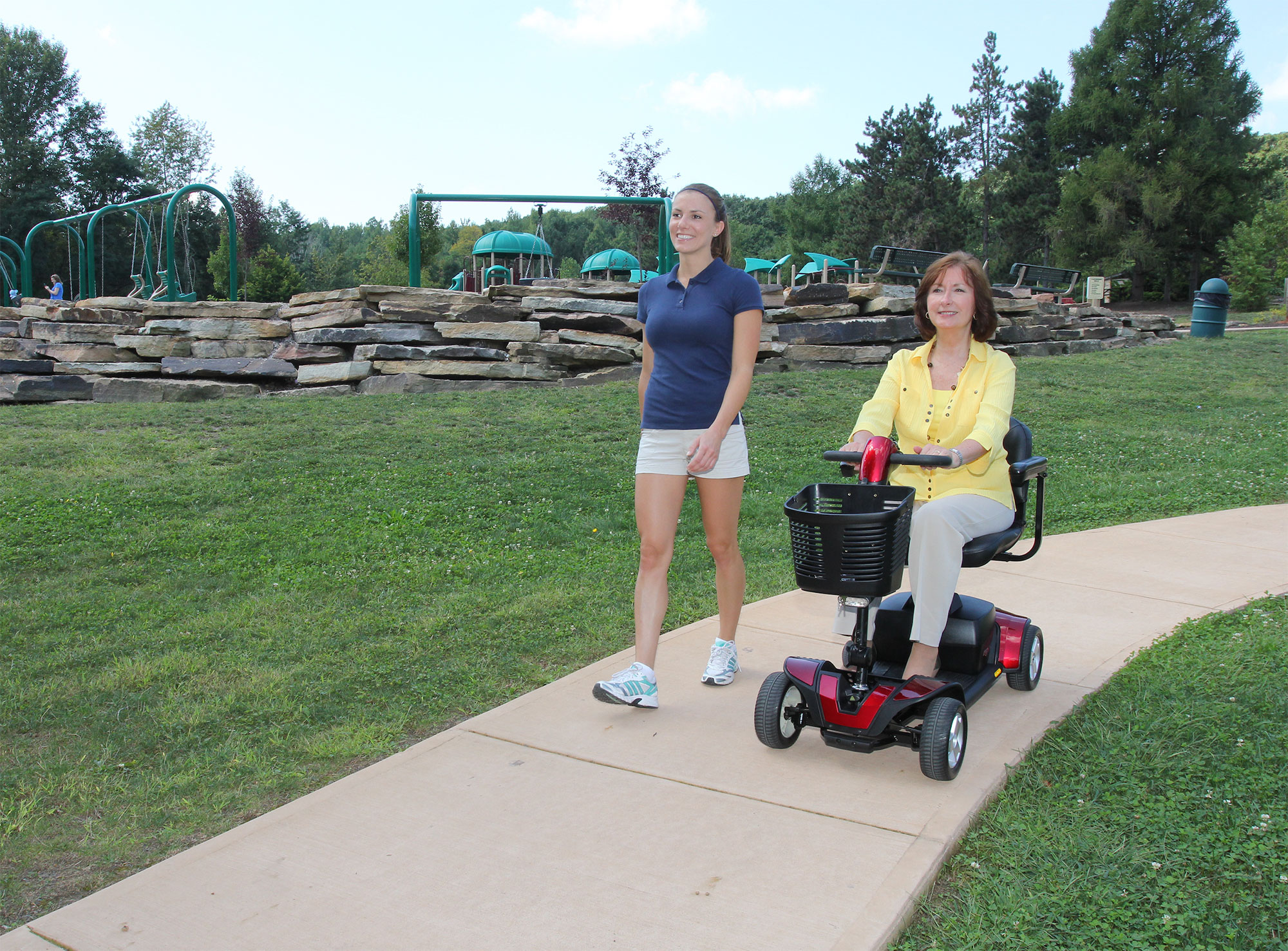
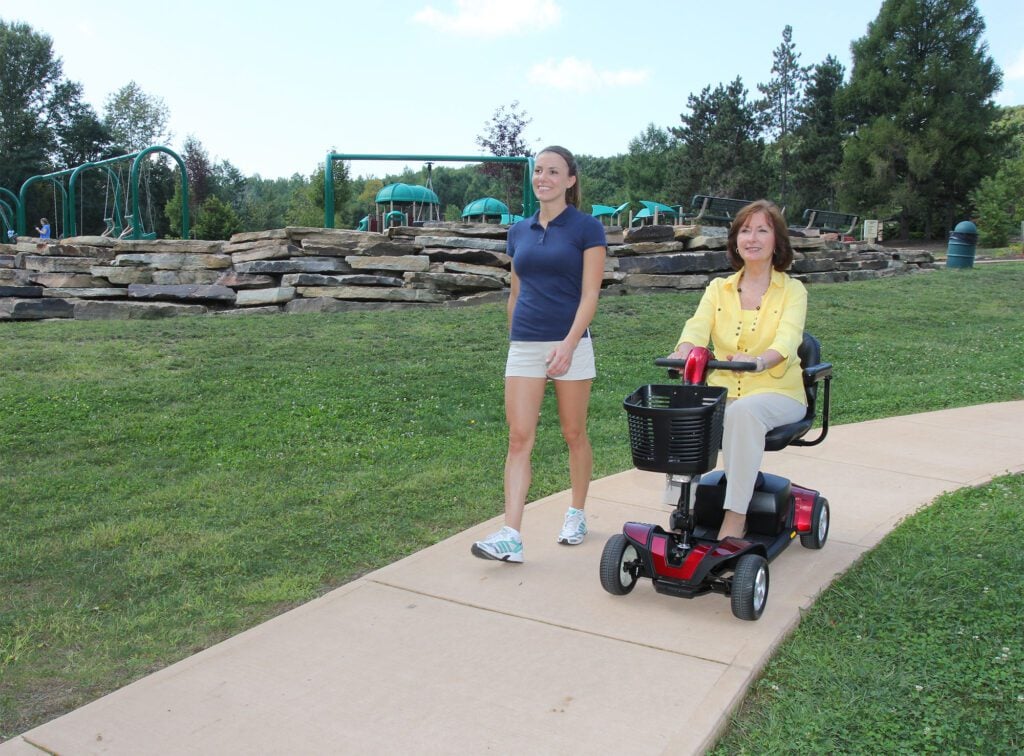
Mobility scooters are designed for users who can typically sit upright, transfer safely, and operate steering controls independently. People commonly use them for shopping, neighborhood travel, community events, large stores, retirement communities, and vacations.
Scooters come in several styles, including lightweight travel models, folding scooters, full-size scooters, and larger models with more range and outdoor capability. Smaller models are often easier to transport, while full-size scooters may offer more comfort, stability, and battery range.
For someone who can walk short distances but gets tired on longer outings, a scooter can provide more independence without constant walking.
Power Wheelchairs
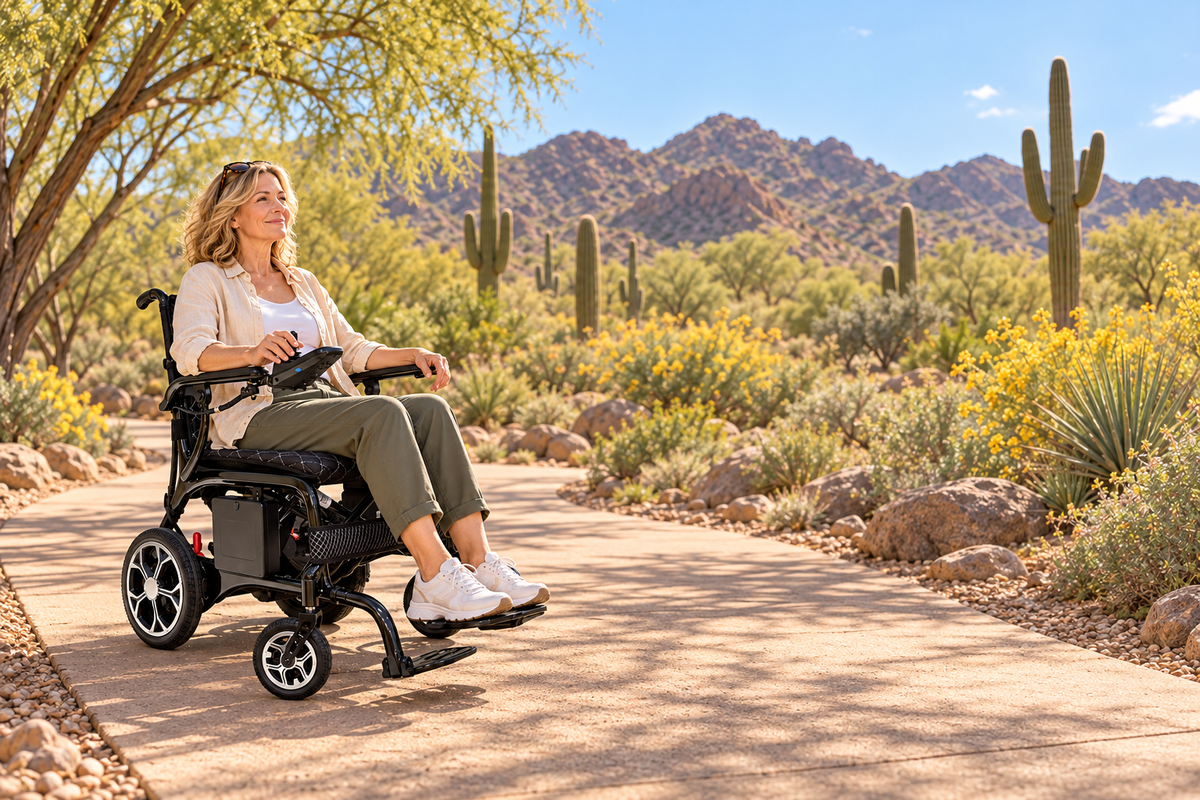
Power wheelchairs use an electric motor and joystick-style controls. They are often better suited for users who need more consistent seated mobility or tighter maneuverability indoors.
Because many power chairs have a smaller turning radius than scooters, they can work well in homes, apartments, assisted living settings, medical facilities, and stores. Seating options and support can also be more customizable depending on the model.
A power wheelchair may be a better fit for someone who has difficulty walking throughout the day or cannot comfortably propel a manual wheelchair.
What Is Manual Mobility?

Manual mobility products support movement without a battery-powered motor. Depending on the product, the user may walk with support, propel the device independently, or rely on a caregiver.
These products can be ideal for people who still have some walking ability, need occasional support, or want something lightweight and easy to transport.
Walkers and Rollators
A traditional walker provides stability while walking and may need to be lifted or slid forward. It can help someone who needs more balance and support but still has enough strength and endurance to walk.
A rollator uses wheels, hand brakes, and often a built-in seat. It can be easier to move than a standard walker and gives the user a place to rest when needed.
Rollators are especially useful for people who can walk independently but become tired during longer outings.
Manual Wheelchairs and Transport Chairs
A manual wheelchair can usually be propelled by the user or pushed by a caregiver. It can work well for people who need seated mobility but still have enough upper-body strength to move the chair independently.
A transport chair is usually lighter and designed primarily to be pushed by another person. Because it often folds easily, it can be practical for appointments, shopping, travel, and short outings.
For families with a caregiver who will usually be present, a transport chair may be easier to manage than a heavier wheelchair.
Power Mobility vs. Manual Mobility at a Glance
Power mobility usually requires less physical effort and can support longer distances. Manual mobility is often lighter, simpler to transport, and easier to store.
Power products require charging and may be heavier to load into a vehicle. Manual products don’t require batteries, but they may require more physical effort from the user or caregiver.
No single option works best for everyone. The best choice depends on how the product fits into daily life.
Consider How Much Walking You Can Comfortably Do
If you can still walk but need help with balance, endurance, or occasional rest, a walker or rollator may be enough. Someone who can move comfortably around the house but gets tired during a long shopping trip may benefit from a rollator with a seat.
If longer distances are difficult or exhausting, a scooter or power wheelchair may make more sense. Power mobility can reduce the amount of physical effort required and make it easier to stay active in larger environments.
The goal is to choose a product that gives you enough support without making everyday tasks more complicated.
Think About Upper-Body Strength
Self-propelling a wheelchair requires arm and shoulder strength, especially over carpet, ramps, uneven surfaces, or longer distances. Someone who can move a manual wheelchair easily at home may find it much harder to use outside or across a large facility.
If upper-body strength or endurance is limited, a power wheelchair can reduce that physical demand.
For caregiver-assisted mobility, consider the caregiver’s strength. A lightweight transport chair may be easier to lift, fold, and push than a heavier wheelchair.
Compare Indoor Maneuverability
Before choosing a mobility product, think about where you’ll use it most often.
For indoor use, measure doorways, hallways, elevators, bedrooms, and bathrooms. Tight corners and small rooms can make a large scooter difficult to use.
Compact power chairs, walkers, and rollators may be easier to maneuver in smaller spaces.
Home layout matters just as much as product specifications. A mobility device can have the right features but still be impractical if it cannot turn comfortably in the rooms you use every day.
Consider Outdoor Use
For scooters, consider wheel size, ground clearance, suspension, battery range, and stability. Larger scooters are often better suited for sidewalks, outdoor shopping centers, community paths, and longer trips.
Manual mobility products can also work well outdoors, but terrain matters. Larger wheels can make a rollator easier to use on uneven sidewalks or outdoor surfaces.
Consider gravel, slopes, curbs, and rough pavement before deciding.
Transportation Can Determine Which Product Works Best

Before purchasing, consider your vehicle and how much cargo space is available. Consider the product’s weight, whether it folds or disassembles, and whether someone can safely lift the components.
Lightweight travel scooters are popular because some fold or separate into smaller pieces. These models are easier to fit in a trunk or SUV.
Larger scooters and power chairs may require a vehicle lift or carrier.
A product that works perfectly at home can become difficult to use if it is too heavy or bulky to transport.
Think About Battery Range and Charging
Battery range can be affected by user weight, terrain, hills, speed, temperature, and battery condition. Treat advertised range as a guide, not a guarantee in every situation.
Consider how far you realistically travel on a normal day.
Someone using a scooter around a retirement community may have very different range requirements from someone who only uses a power chair inside the home.
A consistent charging routine helps keep the equipment ready when it is needed.
Consider Whether a Caregiver Will Be Involved

Someone who wants to move independently may prefer a power scooter or power wheelchair if they can operate the controls safely.
If a caregiver will almost always be present, a transport chair may be a practical option.
Consider both the user’s needs and the caregiver’s abilities. A device that is too heavy to lift or difficult to push can create problems even if it is comfortable for the person sitting in it.
Portability vs. Comfort
The tradeoff can be smaller seating, less suspension, lower weight capacity, or shorter battery range.
Full-size scooters and power chairs may provide more supportive seating, greater stability, and longer operating range, but they can be harder to transport.
Think about where the product will spend most of its time.
If it will primarily stay at home or in a retirement community, comfort may matter more than portability. If it will travel frequently in a car, weight and folding size may matter more.
Short-Term vs. Long-Term Mobility Needs

Temporary mobility needs may include recovery after foot or ankle surgery, a short-term injury, or mobility support during a visit to Arizona.
In those situations, renting may make more sense than purchasing.
Long-term mobility needs require more attention to comfort, durability, fit, service, and daily usability.
If you’ll use the product every day, it is worth spending more time testing options before deciding.
Renting vs. Buying Mobility Equipment
It can also make sense for travel, visiting family, medical appointments, or trying a product category before buying.
Buying may be more appropriate for daily long-term use, frequent community mobility, or when the user needs a specific size, configuration, or set of features.
The right choice depends on how often you’ll use the product and for how long.
Try Equipment Before Making a Decision
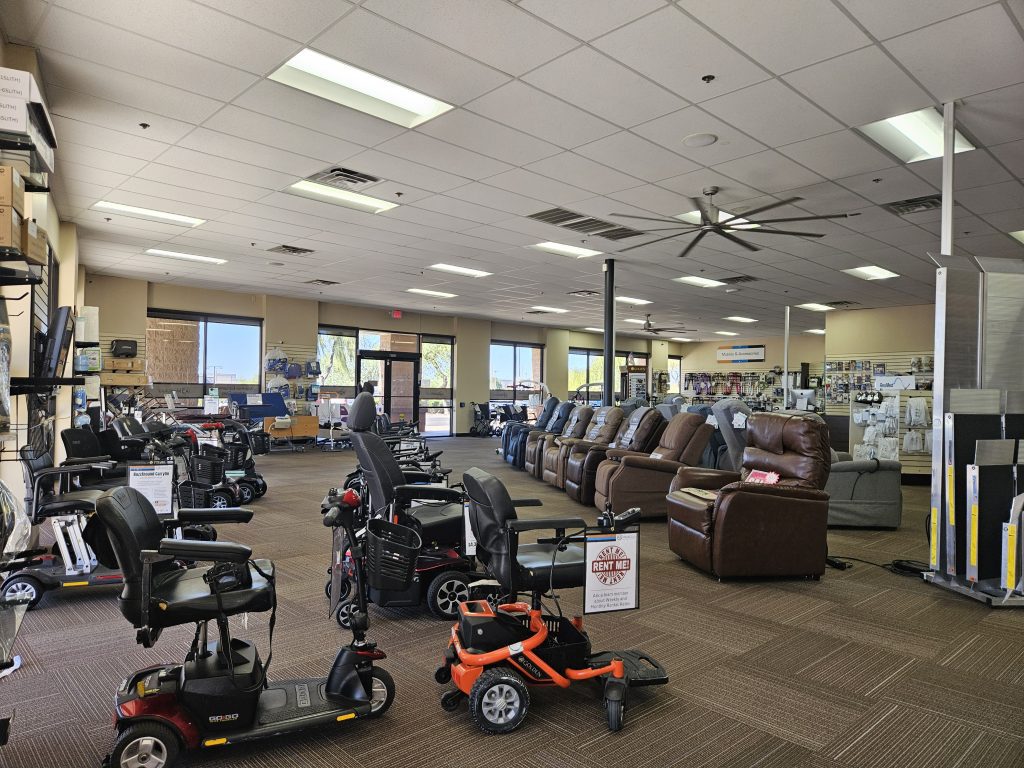
Specifications can help narrow your choices, but they don’t tell you how a mobility product will feel.
Whenever possible, try the equipment in person.
- Sit in the seat.
- Test the steering or brakes.
- Turn in a small area.
- Practice getting on and off.
- Fold the product if portability matters.
For a scooter or power chair, make sure the controls feel comfortable and easy to operate.
For walkers and rollators, check handle height, braking, stability, and seat comfort.
Trying equipment before buying makes it much easier to identify what works for your body and daily routine.
Example: Shopping and Errands
Consider someone who can walk comfortably around the house but gets tired during long shopping trips.
- A rollator may provide enough support by offering stability and a place to sit when needed.
- A transport chair may work better if a caregiver is usually present.
- A travel scooter may offer the most independence if the person wants to move through large stores or shopping centers without relying on someone else.
All three options can address the same general problem in different ways.
Example: Mostly Indoor Use
Now consider someone who has difficulty walking safely through the home.
- A walker may provide enough support if the person still has good endurance and balance.
- A compact power wheelchair may be more appropriate if walking is consistently difficult.
- A manual wheelchair may work if the user can self-propel or has caregiver support.
Door width, turning space, furniture placement, and bathroom access should all be checked before deciding.
Common Mistakes When Choosing Mobility Equipment
One common mistake is choosing based mainly on price.
Cost matters, but fit, comfort, transportation, and usability matter just as much.
Another mistake is buying equipment that is too large for the home. A full-size scooter may be comfortable outdoors but frustrating in a narrow hallway or small apartment.
Transportation is another often-overlooked issue.
Before buying, confirm the equipment weight, folded dimensions, and whether it can be safely loaded into the vehicle.
Finally, avoid choosing a product without considering the user’s actual physical abilities. Balance, grip strength, endurance, coordination, and transfer ability all affect which option will work safely.
Frequently Asked Questions
What is the difference between power mobility and manual mobility?
Power mobility uses a battery and motor to move the user. Manual mobility relies on walking, self-propulsion, or caregiver assistance.
Is a mobility scooter better than a walker?
They serve different needs. A walker supports continued walking, while a scooter provides powered mobility for someone who needs help covering longer distances.
What is the difference between a power wheelchair and a mobility scooter?
Power wheelchairs usually use joystick controls and often have a tighter turning radius. Mobility scooters typically use handlebars or a tiller and are commonly chosen for community and outdoor mobility.
Should I buy a rollator or a wheelchair?
A rollator is generally appropriate for someone who can still walk with support. A wheelchair provides seated mobility for someone who cannot comfortably walk the needed distance.
Are folding mobility scooters good for travel?
They can be. Compare total weight, folded dimensions, battery type, range, and whether the scooter can be safely lifted into your vehicle.
Can I rent a mobility scooter in Arizona?
Yes. AZ MediQuip offers mobility rentals for people who need temporary equipment for recovery, travel, seasonal stays, or other short-term needs.
Can I try mobility equipment before buying?
Yes. Trying equipment in person helps you compare comfort, steering, turning, braking, folding, and ease of use before deciding.
Does AZ MediQuip offer both power and manual mobility products?
Yes. AZ MediQuip offers mobility scooters, power wheelchairs, manual wheelchairs, walkers, rollators, transport chairs, knee scooters, and other mobility products.
Choose the Mobility Product That Fits Your Everyday Life
The best mobility product depends on how you move, where you spend your time, and what kind of support makes everyday life easier.
Someone may use a walker at home and a scooter for longer outings. Another person may rely on a power wheelchair throughout the day. A caregiver may prefer a lightweight transport chair for appointments and travel.
Consider walking ability, endurance, indoor space, outdoor terrain, transportation, battery requirements, caregiver support, and how long you’ll need the equipment.
Choosing the right mobility product should make daily movement easier, safer, and more practical.
Let AZ MediQuip Help You Find the Right Mobility Solution
AZ MediQuip offers both power and manual mobility products for Arizona families, including mobility scooters, power wheelchairs, manual wheelchairs, walkers, rollators, transport chairs, and knee scooters.
Customers can also explore rental options for temporary mobility needs, travel, recovery, and seasonal stays.
Visit www.azmediquip.com to browse mobility equipment or stop by an AZ MediQuip location to compare options and find the product that fits your daily needs.
Related Articles