Prevent Falls This Fall and Make Home Safer
A fall at home can happen during the most ordinary part of the day. For older adults and anyone with limited mobility, balance changes, weakness, or recovery from surgery, these everyday movements can become harder over time.
The good news is that many fall risks around the home can be addressed with relatively simple changes. The right equipment can provide extra stability where it is needed most, reduce the amount of effort required to move, and help people stay more confident and independent at home.
At AZ MediQuip, we help individuals and families find home medical equipment that fits the person, the home, and the way the equipment will actually be used.
If you are looking for ways to make a home safer, here are some areas worth evaluating first.
Start With the Bathroom

The bathroom deserves special attention when you are looking for fall risks. Smooth flooring, water, limited space, and repeated sitting and standing can make the bathroom one of the more challenging areas of the home for someone with limited mobility.
A good place to start is by watching how the person moves through their normal routine.
- Do they reach for the wall when stepping into the shower?
- Are they using a towel bar for support?
- Do they have trouble lowering themselves onto the toilet?
- Do they avoid showering unless someone else is nearby?
Those signs can help identify where additional support would make the biggest difference.
Add Grab Bars Where Support Is Needed
Grab bars provide a secure handhold in areas where someone needs extra stability. They are commonly installed near showers, bathtubs, toilets, and other places where someone changes position.
A grab bar needs to be located where the person naturally reaches for support. It also needs to be installed securely enough to handle the force placed on it.
Towel bars, shower doors, and countertops are often used as improvised handholds, but they were not designed for that purpose.
AZ MediQuip offers grab bars and professional installation options for customers who want help determining the right placement.
For many homes, adding grab bars is one of the easiest ways to improve bathroom safety without making major changes to the room.
Consider a Shower Chair
Standing for an entire shower can become tiring, especially for someone with reduced strength or endurance. A shower chair lets the person sit while bathing, reducing the time they need to balance on a wet surface.
AZ MediQuip carries bath chairs with features such as back support, armrests, adjustable height, and different seat widths.
When choosing one, consider the shower size, the user’s height, weight capacity, and whether armrests would make sitting and standing easier.
A properly fitted shower chair can make bathing feel far more manageable.
Make Getting Into the Tub Easier
Stepping over the wall of a bathtub is another movement that deserves attention. To do it safely, a person must lift one leg while briefly balancing on the other. That can be difficult for someone with limited hip movement, weakness, or balance concerns.
A tub transfer bench can help.
The user sits on the bench outside the tub and then moves across the seat instead of stepping over the tub wall while standing.
For someone who still enjoys using their existing bathtub but has started struggling with entry and exit, a transfer bench can be a practical solution.
Make the Toilet Easier to Use
Standard toilets can feel very low when leg strength or joint mobility declines. The farther someone has to lower themselves, the more effort it takes to stand back up. A raised toilet seat can reduce that movement.
AZ MediQuip carries toilet seat risers and models with safety rails, giving the user added height and stable armrests for support. You can also add toilet safety rails around some toilets without replacing the seat.
These products can be especially helpful for someone who walks independently once they are standing but struggles with the transition between sitting and standing.
Watch for warning signs such as pushing heavily on the sink, grabbing a towel rack, or needing multiple attempts to stand.
Those are signs the current setup may no longer be working well for the user.
Pay Attention to Favorite Chairs and Recliners
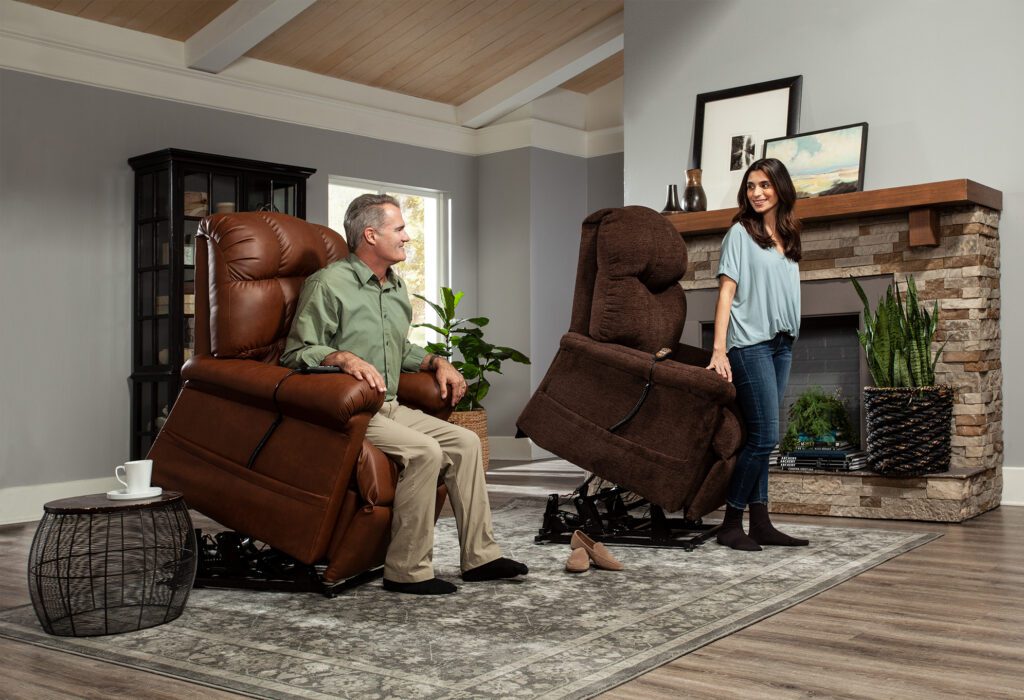
The living room is another place where transitions can become difficult. People often spend hours sitting in the same recliner or chair each day. As leg strength changes, getting out of that chair may become one of the hardest movements.
You may notice someone rocking forward several times before standing. They may push down hard on the armrests or reach for nearby furniture as soon as they get up.
A power lift chair can reduce that strain.
Lift chairs gradually raise the seat and help bring the user closer to a standing position. AZ MediQuip carries power lift chairs from leading mobility brands, including models with different sizes, positioning options, fabrics, and weight capacities.
Whenever possible, trying a lift chair in person can help determine whether the seat depth, height, and movement feel comfortable.
For many users, a lift chair makes one of the day’s most difficult movements much easier.
Choose the Right Walker or Rollator

One of the biggest fall-prevention decisions is choosing the right walking support. A walker that works well for one person may be completely wrong for someone else.
The best choice depends on the user’s balance, strength, endurance, environment, and ability to control the device.
Front-Wheel Walkers
A front-wheel walker can provide consistent support for someone who needs additional stability while walking.
These walkers are commonly used indoors and in situations where the person needs a stable frame to lean on.
AZ MediQuip carries front-wheel walkers in different sizes and configurations.
If the walker is too low, the user may hunch forward. If it is too high, they may have difficulty putting weight through their arms. The goal is to support a comfortable, stable walking position.
Rollators
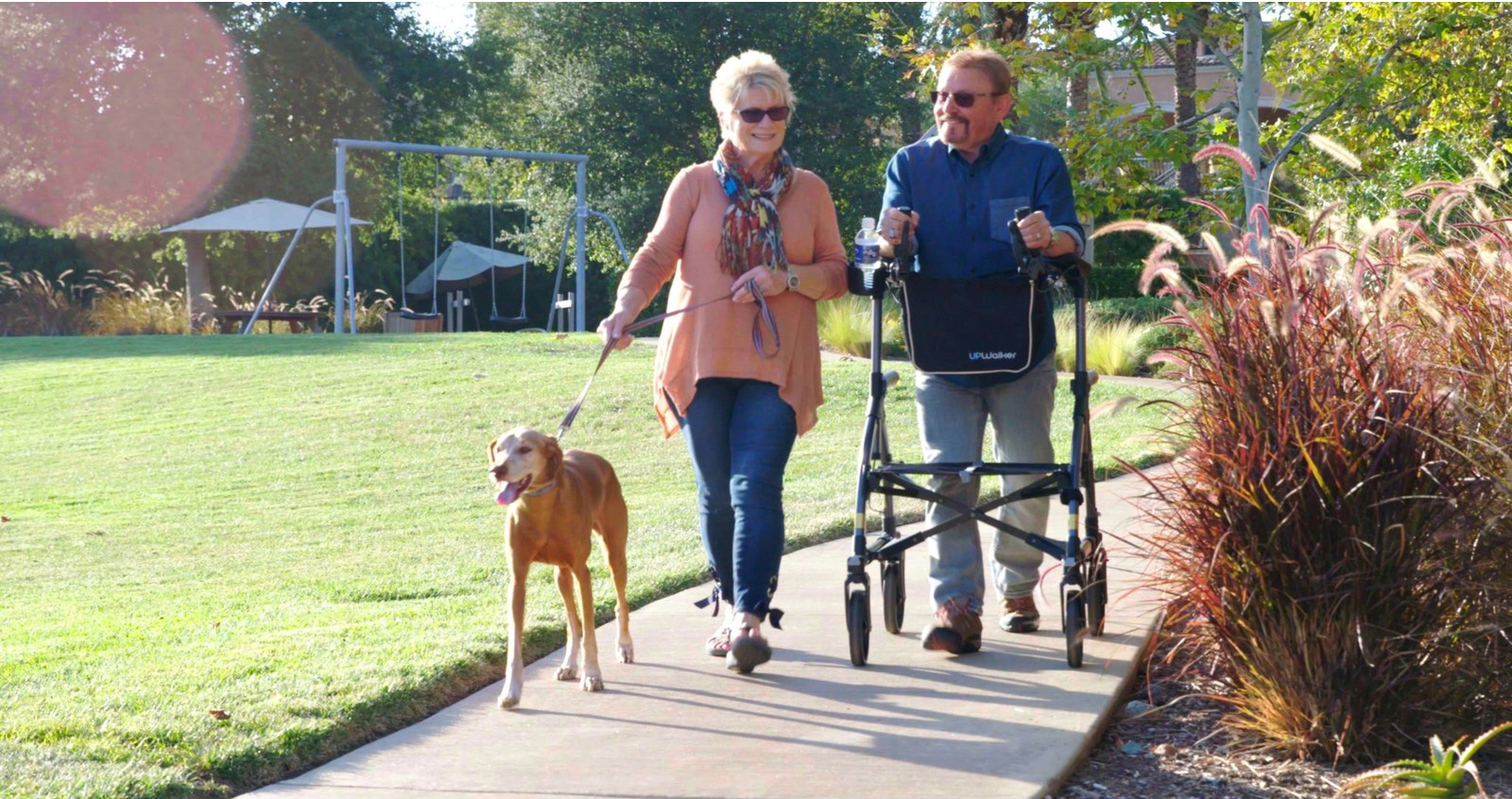
A rollator adds wheels, hand brakes, and usually a seat. For someone who can walk independently with support but gets tired over longer distances, the built-in seat can be especially useful.
A rollator lets the person stop and rest without having to find a chair.
AZ MediQuip carries several rollator styles, including lightweight models and options designed for outdoor terrain.
The braking system is an important consideration. The user needs to operate the brakes comfortably and understand how to lock them before sitting.
Think About Where the Walker Will Be Used
Indoor and outdoor environments place different demands on mobility equipment. A walker used primarily on smooth flooring may need to be compact enough to turn through hallways and doorways.
Someone who spends more time outdoors may benefit from larger wheels that handle sidewalks, parking lots, and uneven surfaces more comfortably.
If the walker needs to fit into a car frequently, weight and folding size should factor into the decision. This is one reason trying different models can be valuable.
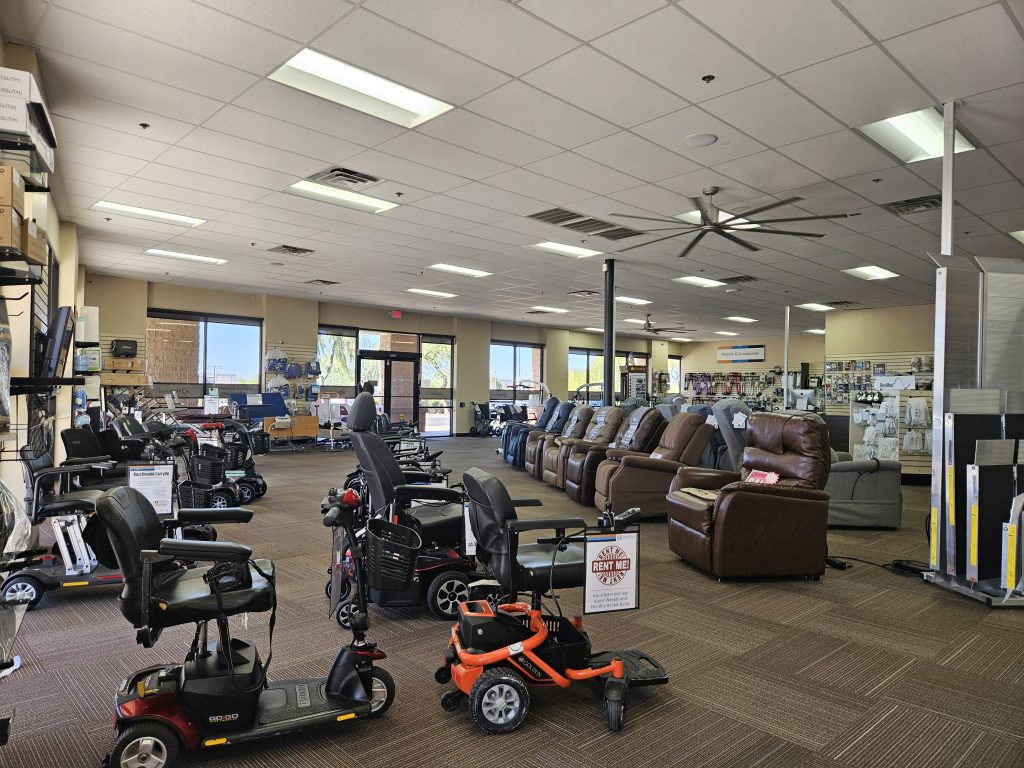
AZ MediQuip showrooms let customers compare equipment in person instead of choosing solely from photos and online specifications.
Make Getting Out of Bed Safer
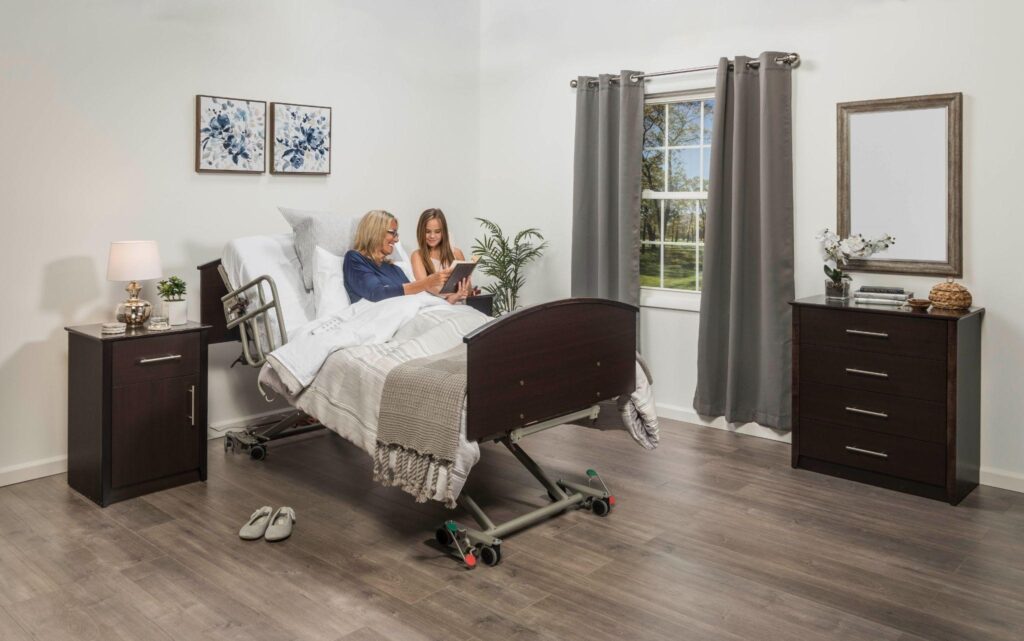
Nighttime can create another set of fall risks. Someone who moves confidently during the day may feel less steady after waking up. Low lighting, fatigue, dizziness, and the urgency of getting to the bathroom can all make movement more difficult.
Start by looking at how the person gets out of bed.
- Do they struggle to sit upright?
- Do they grab the nightstand?
- Do they slide toward the edge of the mattress before trying to stand?
- Do they have trouble getting their walker into position?
Bed rails and bed support handles can provide a stable point to hold while moving from lying down to sitting and from sitting to standing.
AZ MediQuip carries several styles of bed rails and support handles designed for different needs.
Some users mainly need a handle to help them get in and out of bed. Others may need additional support along the side of the mattress.
The equipment needs to work with the specific bed and mattress, so proper fit is important. Also review the entire route from the bed to the bathroom.
Remove loose rugs, keep pathways clear, make sure lighting is easy to access, and keep the person’s walking aid within reach.
Fix Thresholds and Uneven Transitions
Sometimes the biggest fall risk is only an inch or two high. Raised thresholds between rooms, patio doors, and other flooring transitions can easily catch a foot, walker, or rollator wheel.
Someone who used to step over these obstacles without thinking may begin hesitating as their mobility changes. Threshold ramps can smooth out these transitions.
AZ MediQuip offers accessibility solutions designed to make it easier to move between different floor heights.
These can be especially useful for people using walkers, wheelchairs, rollators, or transport chairs. Consider the routes the person uses most often. If they go through the same doorway several times a day, fixing that threshold can meaningfully improve how safely they move through the home.
Look Closely at Steps and Home Entrances
Entrances are another area where small mobility changes can create major challenges.
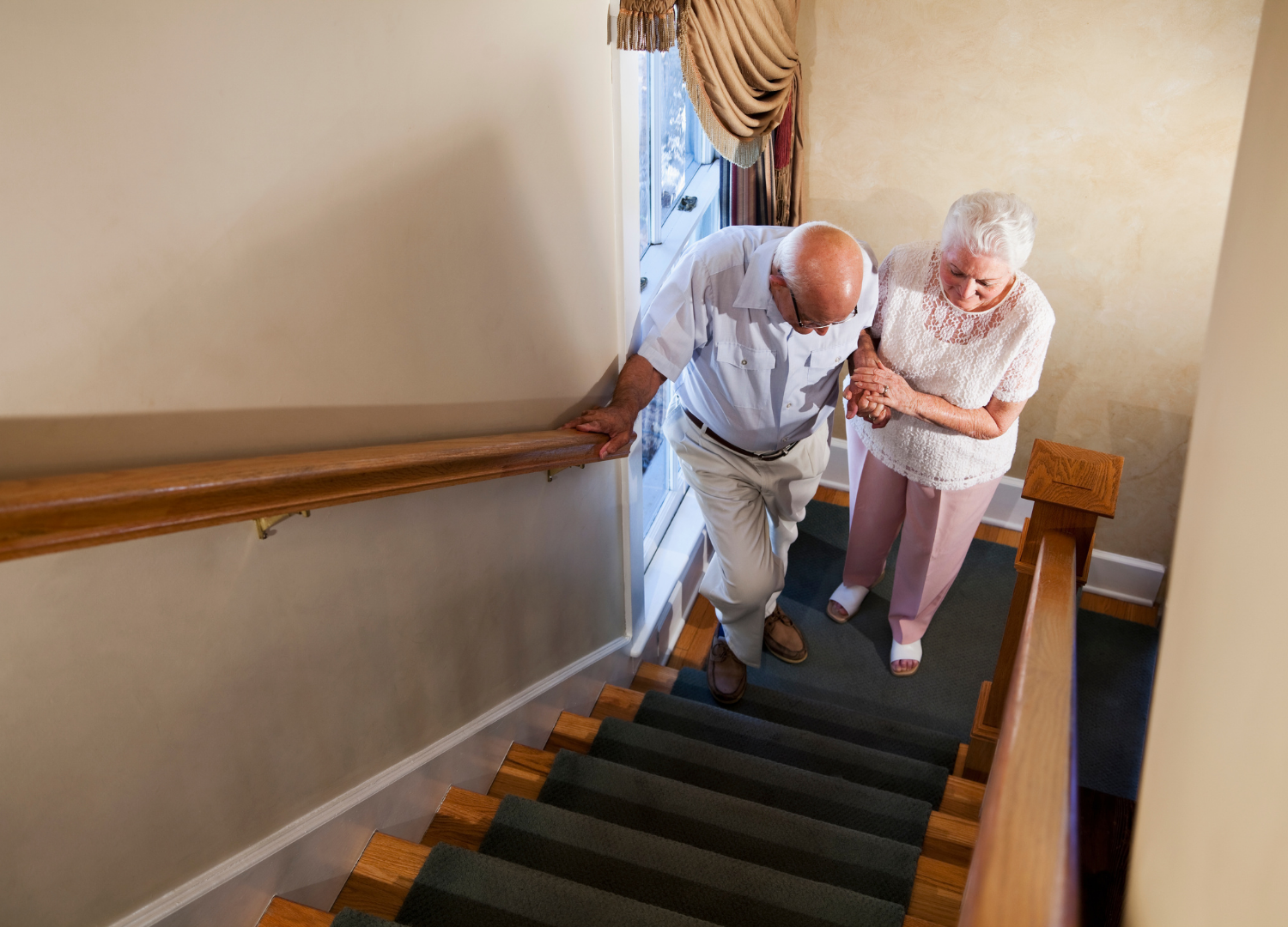
A couple of steps may have been easy for years. After surgery, illness, or a change in balance, those same steps may become one of the hardest parts of leaving the house.
Home accessibility equipment may include exterior ramps, stair lifts, threshold solutions, and other modifications.
AZ MediQuip also provides installation services for several types of home accessibility products.
Evaluate larger modifications carefully because the right solution depends on the home’s layout and how the person moves.
The objective is to create a route that is consistently easier to navigate, whether the person is walking, using a rollator, or using a wheelchair.
Match the Equipment to the Person
Buying fall-prevention equipment based only on a product description can lead to problems.
- Body size matters.
- Strength matters.
- Balance matters.
- The layout of the home matters.
Someone with strong upper-body strength may use a walker differently than someone who cannot place much weight through their arms.
A tall person may need a completely different lift chair than a shorter person.
A rollator that works perfectly outdoors may feel bulky inside a small bathroom.
Before purchasing larger equipment, take measurements.
Check doorway widths, bathroom space, bed height, toilet area, hallways, thresholds, and storage space. Think through how the equipment will move through the home. Then consider the user’s daily routine.
Equipment should solve a specific problem and fit naturally into the way that person lives.
Take a Fall-Prevention Walk Through the Home
One of the easiest ways to identify fall risks is to follow the person through their normal day.
- Start in the bedroom.
- Watch how they get out of bed and reach their walker.
- Follow the route to the bathroom.
- Watch how they sit on the toilet, stand back up, and enter the shower.
- Continue into the living room.
- Watch how they get out of their favorite chair and how they move around furniture.
- Then look at the routes leading outside.
- Check thresholds, steps, ramps, and doorway clearance.
- As you go, watch for specific behaviors.
Someone holding onto walls, grabbing furniture, hesitating before transitions, or avoiding certain areas of the home may be telling you exactly where they need support.
Frequently Asked Questions
What equipment can help prevent falls at home?
Common fall-prevention equipment includes grab bars, shower chairs, tub transfer benches, toilet risers, walkers, rollators, lift chairs, bed support handles, threshold ramps, and other accessibility equipment.
The right choice depends on where the person is having difficulty.
What bathroom safety equipment should I consider first?
Start by identifying the movement causing the most difficulty. Someone who feels unsteady while standing in the shower may benefit from a shower chair. Someone struggling to step over a bathtub may need a transfer bench. A person who reaches for walls or towel bars may benefit from properly installed grab bars. Toilet risers and safety rails can help when sitting and standing have become difficult.
Is a walker or rollator better?
That depends on the user. A front-wheel walker may provide more consistent support for someone who needs added stability. A rollator may work well for someone who can walk with support and wants wheels, brakes, and a place to sit and rest. The user’s balance, hand strength, endurance, environment, and ability to control the equipment should guide the decision.
Can a lift chair help prevent falls?
A lift chair can make standing from a seated position easier. For someone who struggles to get out of a recliner, reducing the amount of effort needed to stand may make that transition safer and more comfortable. The user may still need a walker or another mobility device once standing.
When should someone use a bed rail or bed support handle?
Bed support equipment may help someone who struggles to sit up, move toward the edge of the bed, or transition from sitting to standing. Different equipment addresses different needs, so consider the bed style, mattress, and the user’s mobility.
Can I try mobility equipment before buying it?
Yes. AZ MediQuip has retail showrooms throughout Arizona where customers can see and try many types of equipment before buying.
Does AZ MediQuip rent medical equipment?
AZ MediQuip offers rentals for many types of home medical equipment, including walkers, wheelchairs, power lift chairs, hospital beds, mobility scooters, and other products.
A Safer Home Can Support Greater Independence
Fall prevention starts with noticing the parts of daily life that have become more difficult.
- A grab bar can make getting into the shower feel more secure.
- A toilet riser can make standing easier.
- A properly fitted walker can provide the support you need throughout the day.
- A lift chair can reduce the struggle of getting up from a favorite seat.
Small changes throughout the home can add up to a safer environment and greater confidence.
You also do not have to figure out every piece of equipment on your own.
AZ MediQuip can help you compare options, find the right fit, and determine which equipment makes the most sense for the person and the home.
Find the Right Home Safety Equipment at AZ MediQuip
If you are concerned about falls at home, start by identifying the movements that have become difficult and the areas where additional support would help most.
Shop AZ MediQuip’s selection of bathroom safety equipment, walkers and rollators, lift chairs, bedroom safety products, and home accessibility solutions at shop.azmediquip.com.
You can also visit an AZ MediQuip location to see and try equipment in person or speak with the team about home safety and installation options.
Related Articles